
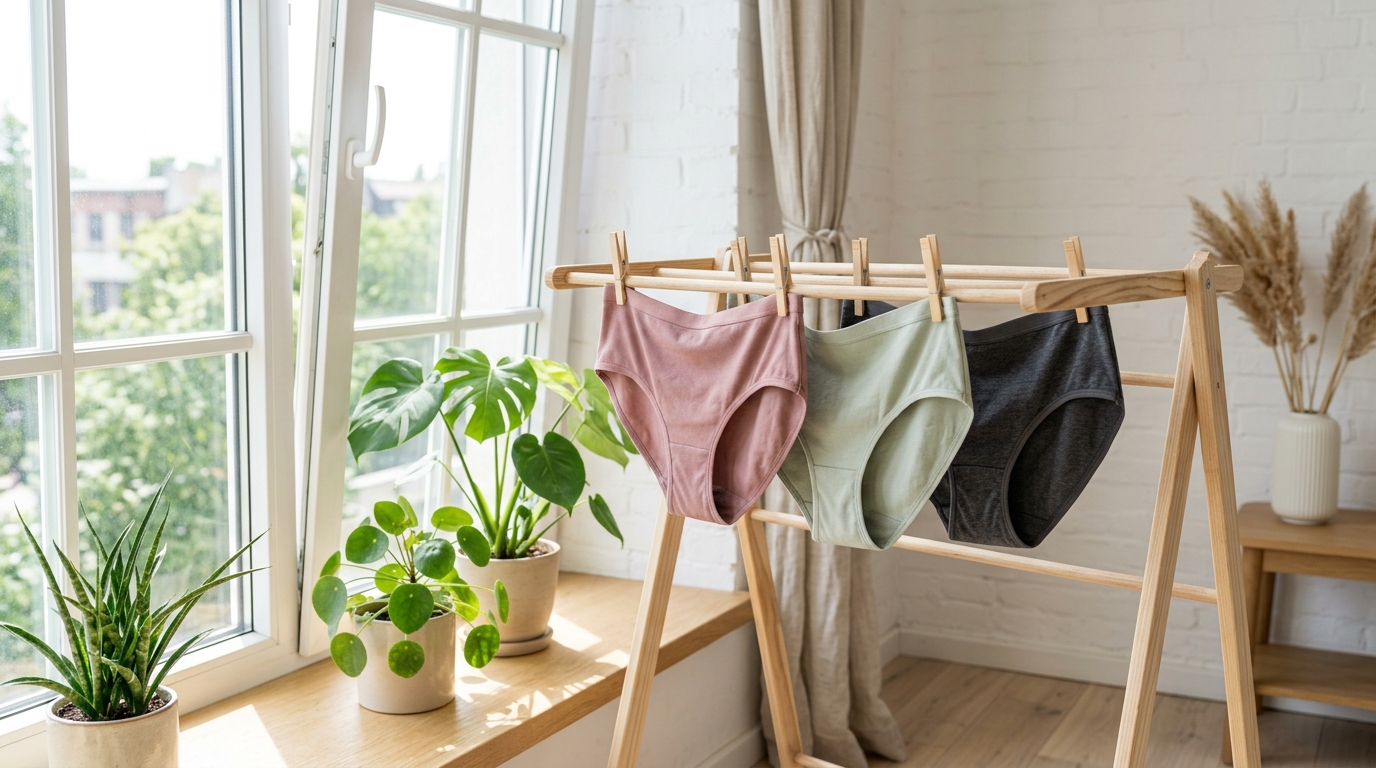
The Evolution of Menstrual Care: From Primitive to Health-Tech
For decades, disposable sanitary pads and tampons were the default solution for monthly menstruation. However, both formats were designed around corporate convenience and planned obsolescence rather than female biological comfort.
Sanitary pads shift, crinkle, unstick from underwear wings, and chafe inner thighs. Tampons pose risks of toxic shock syndrome (TSS), dry out natural vaginal flora, and require frequent bathroom runs. Reusable period underwear represents the modern third wave: everyday intimate apparel infused with lab-tested absorption engineering.
Head-to-Head Comparison Matrix
Here is how Gray Bottle Period Panties compare directly against traditional disposable hygiene options:
- Absorbency Capacity: Disposable Pad (10–15ml) vs. Tampon (8–12ml) vs. Gray Bottle (Up to 80ml — 4x more capacity).
- Leak Security: Pads twist and shift during movement; Gray Bottle underwear hugs your body contours with seamless 360-degree leak-guard edges.
- Sensory Feel: Pads feel plastic, crinkly, and diaper-like; Gray Bottle feels exactly like ultra-soft premium underwear.
- TSS Risk: Tampons carry Toxic Shock Syndrome warnings; period panties are entirely external and non-invasive.
- Environmental Waste: 1 woman generates ~11,000 disposable pads in her lifetime (taking 500+ years to decompose); Gray Bottle generates zero single-use trash.
Financial Breakdown: The 24-Month Reality
While the upfront price of a 3-piece or 5-piece period panty box is higher than a RM 15 supermarket pad pack, the lifetime math tells an eye-opening story.
A standard menstruation cycle costs between RM 45 and RM 65 in pads, panty liners, nighttime ultra-long pads, and replacement underwear. Over 24 months, that adds up to over RM 1,400 spent on disposable waste. A single box of Gray Bottle period panties eliminates recurring monthly pad purchases entirely, paying for itself in under 9 months.